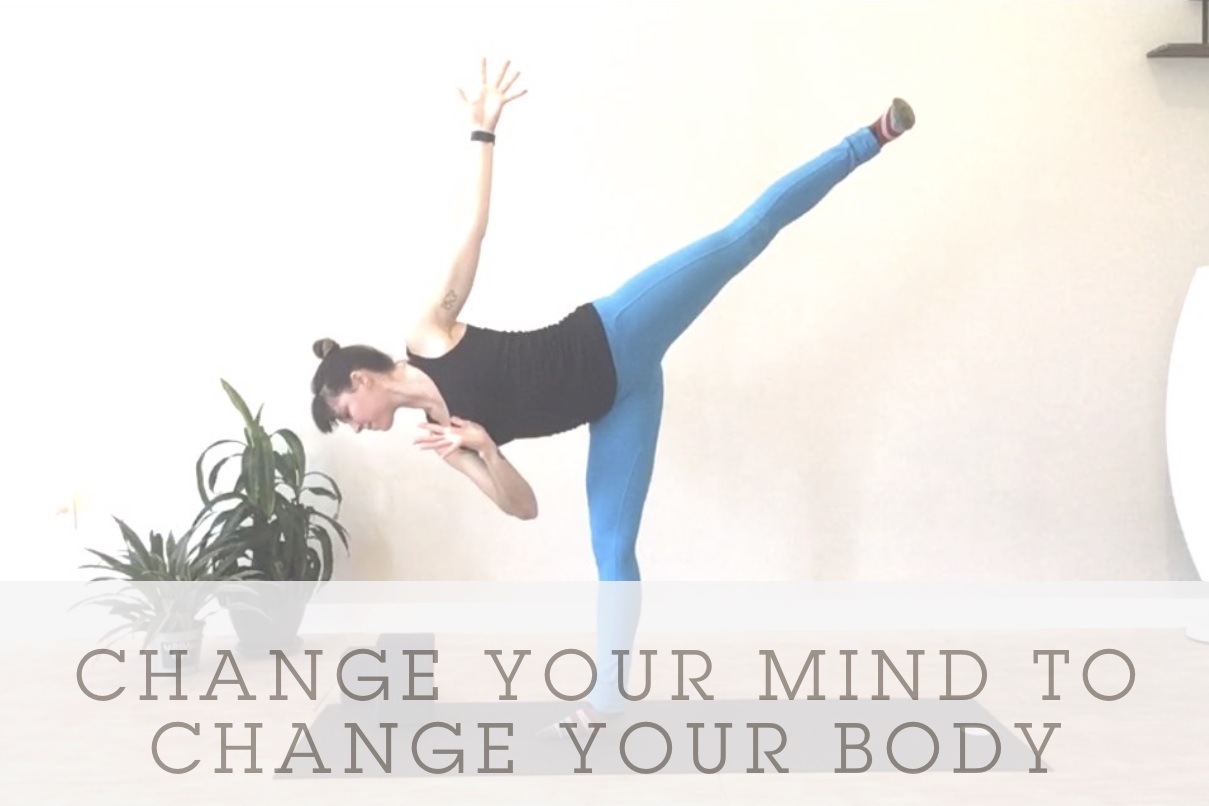
Feeling Emotional? Lets get into those hips!

A tutorial + a simple practice for exploring emotions.

Our hips are ball-and-socket joints, meaning they naturally have more range-of-motion than other types of joints. However, if we don’t allow our hips to access this wide range-of-motion, they can start to feel blocked or even stuck physically. Our hips also correlate to our emotions. If we don’t tend to the wide variety of human emotions, we can feel blocked or stuck emotionally. ⁣

Try spending a few minutes in these two simple yet effective yoga poses - Easy Pose and Child’s Pose. ⁣

  1. Watch the video tutorial on the Easy Pose and Childs Pose. Use props to alleviate any pain or extreme discomfort anywhere in your body.

  2. Breathe big as you hold each yoga pose for up to 3-4 minutes. Your body will tell you through sensation when you’ve had enough. Feel your way through.

  3. Allow any physical hip sensations or emotional sensations that arise to be felt. Use your breath to ride the waves of sensation that flow in such as physical hip sensations like stretch, tension, discomfort. If emotional sensations flow in, do the same and use your breath to allow the emotions to be felt. You are safe to feel your emotions, as they are simply a form of communication from your body.

  4. If there is a lingering emotional sensation see if you can name it. Is it anxiety, shame, fear, gratitude, happiness, love? Once you’ve identified it, let it be seen, heard, acknowledged. Simply having a conversation with the emotion/sensation is enough. I know this may seem odd but it has been very helpful for me to get to know my emotions through simple yoga, breath and chit chat with my body. The more I understand each emotion, the more I can honor them, and the more easily they flow in and out.

  5. Journal or voice memo what came in when you allowed your hips to open.

Meditation is Medicine + Meditation Practice

If I told you I had a pill that would significantly decrease your chances of suffering from all sorts of disease would you buy it and take it daily? How much money would you spend on that wonder pill? Would you share it with your family and friends to help keep them healthy too? What if I told you that you didn't need a pill to make this happen. What if I told you that you could reduce your chances of suffering all sorts of disease simply by meditating daily. Would you be as gung ho as you were about the magic pill?

What is meditation?

Meditation is the practice of training your brain to work at different frequencies. Our brain has five different categories of brain waves, each correlating to different kinds of activities. The higher frequencies are associated with active learning and an alert prefrontal cortex, where we spend most of our day. With meditation, you can train your brain to move into the lower frequencies which are associated with calm and peaceful feelings. Lower, slower, wave length frequencies allow more time between thoughts. Meditation allows you to move from highly active thinking mind to a more quiet and visual mind. 

What are the benefits?

The studies on mediation are vast and the benefits are outstanding. From young to old, healthy to ill, CEOs of Fortune 500 companies and Oprah Winfrey to busy moms and students, meditation can help to not only make you more focused and productive, but it can help you to stay calm and make tough decisions in crazy and hectic moments. Look at this list below. I have never seen anything with proven results that positively affect such a wide variety of human life as meditation (sleep and exercise are a close second). Benefits include but are not limited to the following:

  • Decreases depression

  • Regulates mood and anxiety disorders

  • Reduces stress

  • Reduces panic disorders

  • Increases concentration

  • Reduces alcohol and substance abuse

  • Improves focus and attention

  • Improves ability to work under stress

  • Improves information processing

  • Improves decision making

  • Trains mental strength, resiliency and emotional intelligence

  • Relieves pain more than Morphine

  • Improves pain tolerance

  • Helps manage ADHD

  • Improves learning, memory and self-awareness

  • Improves rapid memory recall

  • Prepares you to deal with stressful events

  • Fosters creativity

  • Reduces risk of heart disease and stroke

  • Increases resiliency to stress and therefore increases immune system

  • Reduces blood pressure

  • Decreases inflammatory disorders

  • Helps prevent asthma, rheumatoid arthritis, and inflammatory bowel disease

  • Helps treat premenstrual syndrome and menopausal symptoms

  • Reduces risk of Alzheimer's and premature death

  • Helpful for those with Fibromyalgia

  • Helps to manage psoriasis

  • Improves empathy and positive relationships

  • Reduces social isolation

  • Increases compassion

  • Decreases worry

  • Decreases feelings of loneliness

  • Reduces emotional eating

All of these benefits have studies to back them up. Check out this post for links to all of the science. 

How do you begin a meditation practice?

First, take a look at the list above and count how many of those things would benefit your life. I counted 10 for myself. Next, decide how important those benefits are to you. Are they no big deal, or are they differences that would greatly change your day to day life. Take a moment to notice the value that a mediation practice would bring to your wellbeing. For me, this is a no brainer, pun intended. Looking at my list of things that meditation can help allows me to recognize the massive need for a practice in my life. Tap into what your life would look like with a solid meditation practice and then set yourself up for success.

  • Just Breathe. You can start with just 2 minutes of sitting quiet and focusing on your breath. Feeling your inhales and feeling your exhales. If your mind wanders simply bring it back to your breath. Building to 20 minutes daily is ideal. 

  • Find a video or app to help guide you through. If you want more than the two minutes you can search for all sorts of specific meditations, such as gratitude, lovingkindness, forgiveness, or increased energy and they range from 5 minutes to hours long. I love the apps Calm & Insight Timer and people rave about Headspace.

  • Create a special place to do your meditation. This can be as basic as a yoga mat on the floor or can incorporate pillows, candles, photos of people and places that make you happy, or any other objects that make you smile. The more enjoyable your space the more likely you'll come to it. 

  • Connect meditation to another habit. I personally like to do my meditation early but Im not a stickler about it. I sneak lots of different kinds of meditations in all day everyday. But if you need help making it a regular part of your day, connect it to a habit you already have each morning like brushing your teeth.

  • Add it to your calendar or daily checklist. I go in and out of loving and benefiting from checklists, but when I’m trying to incorporate something new, having reminders is super helpful. If you’re not a checklist kinda human, maybe just place Post-it notes all around for a reminder :)

  • Use it throughout the day. If you missed it in the morning, find time to squeeze it in later. My practice generally looks like lots of little moments with the hopes of them all overlapping one day, lol. I use my 30 Breaths meditation (in which you sit and focus on your breath for 30 breaths) all the time. When I'm stressed and feeling frazzled, or when I'm antsy and feeling like I need something right this minute or i might snap, like sugar, junk food, buying crap, more coffee, or a nap.

  • Move into your body. Simply bringing your awareness into your body is enough to slow the mental chatter. There are many techniques like moving meditations - yoga, swimming, dance, etc., body scan meditations which practice somatic awareness, even massage can become a way to step out of the mind and into the body. The video below is a simple practice of entering into the body thru the hands.


One conscious breathe in and out is a meditation. – Eckhart Tolle

Building a Healing Toolkit

I previously shared the epic growth I experienced this summer and in it I spoke about how I currently move through negative emotions. The following is a very brief introduction to some of the tools that have now become ritual and habit to help me feel my best and breakthrough old patterns and beliefs. I have many, many more like yoga, journaling, reiki, and guides/coaches, but these are simple practices that you can start to sprinkle into your days. Like most things that add value to our lives - eating healthy, moving our bodies, maintaining relationships - these practices take time to build and require regular maintenance to see the benefits they can bring. Start slow and have fun exploring.

5D518DA2-D76C-4A9F-954F-A55281994904.jpg

Mindfulness

Mindfulness is a practice that brings you back to the present moment. By tuning into your body, the urges and messages it is sending, and the sensations it experiences through sight, sound, taste, and touch you are lured into the moment. Much of our struggles with anxiety, fear, and depression are due to a disconnection between our minds and our bodies. We are busy thinking and most often stressing over things that lead to a complete neglect of our body, what it is feeling and encountering. We’ve all driven our cars and noticed that we zoned out for miles, we left our body to do the work and wandered into an often stressful place in our minds, allowing ourselves to be distracted by stress. This separation between mind and body leaves us feeling dissatisfied, it means we aren’t present to our lives, instead life is flying right by.

When we bring mindfulness into our daily lives we begin moving from a place where mind and body are connected, resulting in more satisfying experiences. It only takes one moment of mindfulness for our mind, body and soul to become united in a moment of peace. These moments help us to feel connected and safe, hopeful and appreciative, instead of disconnected and lost.

How to:

  • Notice all of your senses while doing routine activities:

    • Driving

    • Eating

    • Showering

    • Cleaning

  • Use your non dominant hand for simple tasks to witness how strong our unconscious habits are, you usually don’t have to think about using your dominant hand to brush your teeth. This reminds us how difficult it can be to change without awareness and practice.

  • Play Eye Spy throughout your day to notice something simple like a certain color or trees. Or you can look for examples of love, joy, or fun being experienced by others throughout your day. Being mindful of simple things brings awareness to how easy it is to overlook what’s right in front of us.

  • Take a closer look at your food. Notice all of the attention, care and effort that was taken to get the food to your plate. This brings gratitude into our meals. It can also bring awareness to the food choices that we make, noticing when meals are filled with so many loving people and actions and when they are just looking to sell us something.

IMG_6191.PNG

Somatic Awareness

Somatic awareness takes mindfulness to the next level, going deeper to observe and explore ourselves through sensation and movement. Simply put, somatic awareness is learning to feel your body and interpret its sensations to provide the body with what it needs. The biggest benefit for me in this area has been learning to identify my emotions, noticing how an emotion feels in my body and then doing my best to name the emotion. Is this fear or worry? Is this guilt or unworthiness? Is this overwhelm or frustration?

Most of us were never taught how to identify our emotions. We were told that a smiley face means we’re happy and frown face means we’re sad. We were never taught what they feel like and in turn how to move through them. This awareness gives us the power to witness an emotion and then create what we need to move forward. Finding forgiveness if we’re experiencing guilt. Lightening the load if its overwhelm we’re experiencing. Leaving them unnoticed, or pushing them away because they are uncomfortable, bottles them up, forcing the body to speak louder (stronger emotions) or even scream at us with painful sensations or dis-ease.

How to:

  • Notice all of your senses while moving your body:

    • Walking, running, gardening, exercising, etc.

  • Name your emotions. - Anytime you have a strong emotion “good” or “bad”, begin playing with giving it a name. Is it fear? Anger? Worry? Happiness? Joy? Hopefulness? Use an emotional scale like this one to help.

  • Feel your emotions. - Get into a relaxed state (bath, beach, nature, post movement) and begin to explore what certain emotions feel like in your body. Conjure a thought or memory that makes you feel happy and notice where this show up in your body and what the sensation feels like. Play with all sorts of emotions, even the “negative” ones when you are in a safe place. I like to start with things like fear, worry, unworthiness and then move into love, happiness, and joy so that I end on a high note.

  • Create an emotions handbook. Combine journaling with any of these other activities, noting what emotions feel like and any other notes, including what balances these emotions.

IMG_6183.jpg

Meditation

Meditation is the act of stepping out of the busyness of the mind and instead bringing the focus to something else, most often the breath. This is the tool with the biggest bang for your buck, but for many it can be difficult to find a regular practice. Meditation is not the act of thinking nothing, its the act of not attaching or following our thoughts, instead letting them come and then letting them go. Eventually, this skill gets stronger and the detachment is easier to find and maintain. Often however, my mind is rather busy and its tough to find this feeling of release, so on those days my practice is to simply sit with my eyes closed until my timer goes off. Practicing first thing in the morning can be helpful for some as well as in nature or after movement.

Start slow and build, maybe starting with 5 minutes and building to 20 minutes. There are so many types of meditation - mindfulness, love and kindness, mantra, yoga, self inquiry, inner child, future self, past self, movement, and many more - but the foundation for most of them is finding that gentle state of release. Guided meditations are helpful when the mind is really active (search YouTube, or use an app like Headspace or Calm).

Meditation benefits can be found anytime the mind shifts out of the chaos of wild thoughts and into a relaxed, often in the body, state. This can be found while doing the dishes or taking a shower, during flowing activities like paddling or yoga. My favorite way to meditate currently is through sound. I love to find a sound that is strong enough to hold my attention, but subtle enough that it doesn’t trigger new thoughts. Noises like crickets, the ocean, a fan, an air conditioner, or the humming of your refrigerator are great options to begin playing with.

IMG_1135.jpg

Self Care

Self care was the first healing tool that I truly embraced and it saved my life. It showed me just how little care I was actually taking care of myself. Sure, I was going to the gym and eating my vegetables, but I was also using alcohol, food, men, shopping and Netflix to avoid any discomfort that I found in my everyday life. Self care allowed me to nurture myself into feeling better, without the negative ramifications that usually showed up after using one of those old tools to “relax” or feel better.

It can seem selfish to spend time on yourself when work needs to be done, others need to cared for, others need much more that you do, and when there is so little time left for ourselves, BUT you may have already experienced the wall that we can hit when we neglect our own health - mind, body and soul. Spending time on your wellness shows that you care about how you feel. It shows others that you are a priority and that they can do the same. Self care is an act of service to all. Even more, this self care practice blossoms into the most amazing self love :)

How to:

As always this is your practice. Keep what works and leave what doesn’t, but do give something a solid try. These practices are cumulative in nature, so you gain the benefits after you’ve built some momentum. I’m a fan of 14 or 30 day challenges to really get the feel for what a tool can do for you.