

The Nervous System Series - The Communication Process Part 4
read overview click here
read part 2 click here
read part 3 click here
Now that we understand the basics of the human nervous system, it’s important to get a better understanding of how all of these systems we have discussed so far work together. The Central Nervous System (CNS) and the The Peripheral Nervous System (PNS) communicate with each other billions of times a day. It never stops. This communication is constant and happens 24/7, even during sleep, to facilitate output in our everyday lives.
The Central Nervous System (the brain and spinal cord) acts as the command center, while The Peripheral Nervous System (the network of nerves throughout the body) acts as the messenger. It translates information into electrical and chemical signals to control everything from voluntary movements to involuntary organ functions. This communication happens in a continuous loop to cue the body to feel, think, and move.
The communication process operates through two main pathways:
1. The Wiring (The Peripheral Nervous System)
Sensory Neurons: Carry incoming messages from your senses (skin, eyes, organs) to the The Central Nervous System (CNS) so the brain can process the environment.
Motor Neurons: Carry outgoing messages from the CNS to your muscles and glands, dictating physical actions.
2. The Signal System
Electrical Signals: Nerves transmit information as rapid electrical impulses (action potentials) along pathways.
Chemical Messengers: At the junction between two nerves (the synapse), electrical signals convert into chemical messengers called neurotransmitters. These chemicals float across the gap and trigger a new electrical impulse in the next neuron or muscle cell, passing the message along.
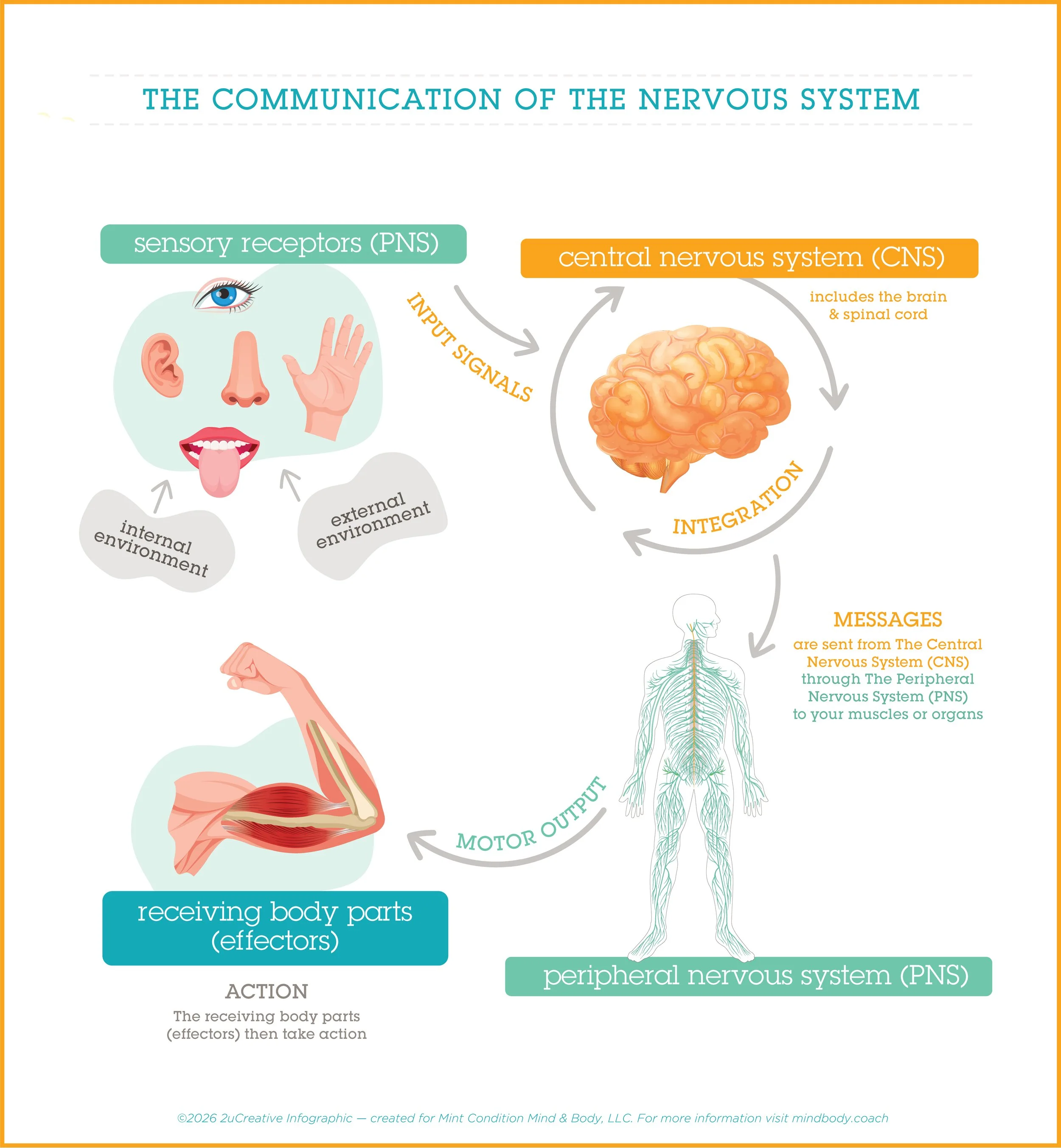
The communication process happens in three main steps:
Step 1: Gathering Information (Sensory Input)
Sensory receptors (cells) in the The Peripheral Nervous System (PNS) detect things like heat, touch, or pain. They send this information as electrical signals to the The Central Nervous System (CNS). Think of these nerves as a scout reporting what they see.
Step 2: Making a Decision (Integration)
The Central Nervous System (CNS) receives the incoming signals. Interneurons in the CNS process, analyze, and interpret the information to decide the appropriate reaction. Like a manager at a headquarters, the CNS figures out the best response.
Step 3: Taking Action (Motor Output)
The Central Nervous System (CNS) sends a new message away from the brain through The Peripheral Nervous System (PNS) to your muscles or organs. The CNS generates a response command. This command travels down efferent (motor) neurons in the PNS, which deliver the signal to the target effectors (muscles, organs or glands) to trigger an action (like pulling your hand away).
Be sure to look out for part 5 in the series where we will continue to explore the depth and complexity of the Autonomic Nervous System (ANS).

Check out the FREE RESOURCES above that are great tools for nervous system regulation in a pinch.
Stay curious about your body and how it feels or what it needs in the moment that is the NOW. Below are a few tools that can help you evaluate where your mind, body and spirit is in this now moment.
Watch Your Breath: Sit still and breathe slowly. Imagine your breath traveling through your body. Notice where the breath feels blocked, such as a tense stomach or tight chest.
Track Physical Cues: Pay attention to your physical signs. Ask yourself if your hands are clenched, your jaw is tight, or your heart is beating fast. These can be signs of stress or anger.
Use Grounding: Press your feet flat on the floor. Notice how heavy or light your body feels. Listen to the sounds around you. This connects your body to the present moment. To take it up a notch, go outside and put your bare feet in the grass or the dirt.